Screensavers, virtual cities, gaming worlds, and idle-screen moments are quickly becoming valuable advertising real estate. A survey of 304 US advertisers conducted by Advertiser Perceptions in February 2026 found that awareness of these placements is high, interest is substantial, and many brands are ready to experiment—so long as the channels can solve a few core problems.
Awareness and interest are already strong. Roughly four in five advertisers (79%) say they’re aware of ads within TV operating-system interfaces such as screensavers and home screens. About two-thirds (66%) have seen or are aware of ads embedded in virtual or digital environments—think virtual cities, landscapes, or branded metaverse spaces—while 68% recognize ads inside gaming or interactive worlds. Even moments when a screen goes idle or a video pauses are on advertisers’ radars, with 74% aware of such placements.
That awareness translates into real interest. Half of advertisers (50%) find virtual and ambient placements extremely or very attractive, and an equal proportion say they’re very or extremely likely to advertise in these environments within the next 12 months. For an emerging format, that level of intent signals that virtual and ambient advertising has moved beyond novelty and into immediate opportunity.
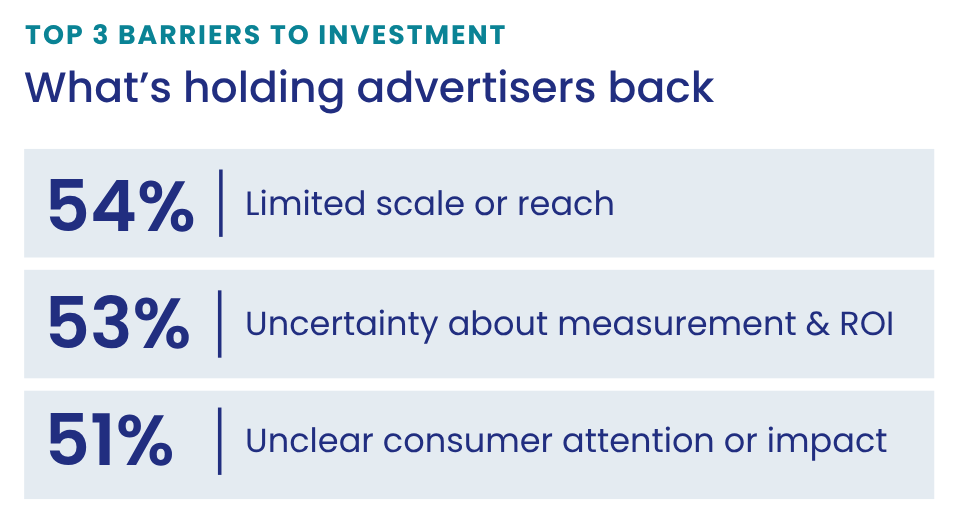
But enthusiasm comes with caution. Advertisers consistently name three primary barriers to investment: limited scale or reach (54%), uncertainty about measurement and return on investment (53%), and unclear consumer attention or impact (51%). These concerns matter because they get to the core of any media decision—will the ad reach the right audience, can performance be proven, and will consumers actually notice and respond?
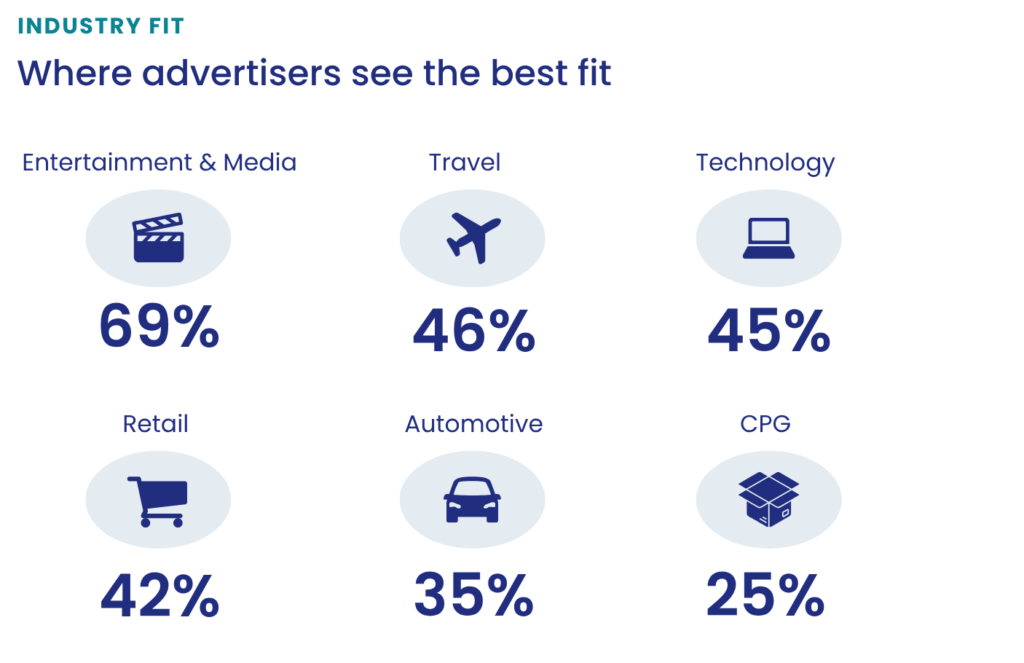
Industry fit is varied but telling. Entertainment and media dominate as the best-suited category, with 69% of advertisers placing it in their top three. Still, travel (46%), technology (45%), and retail (42%) form a solid second tier, and sectors like automotive (35%) and consumer packaged goods (25%) also see applications. That spread implies the channel could be broader than many expect—if platforms can deliver audiences and outcomes relevant to each category.
Execution and measurement are the linchpins. An overwhelming 92% of respondents agree that success in virtual environments depends heavily on execution and measurement. Advertisers aren’t just experimenting for brand novelty; they want evidence that placements are well-designed, integrated, and tied to meaningful metrics. At the same time, 87% see virtual advertising as a meaningful new opportunity for brands, but they emphasize that potential will only be realized when formats are executed thoughtfully and performance can be documented.
Where will the money come from? Budgets are being sourced from a variety of places rather than one obvious line item. General advertising budgets (45%) and general digital budgets (44%) are common sources, followed by experimental budgets (41%) and dedicated funds for this type of advertising (34%). Streaming/CTV and social media budgets each contribute around 30%. The mosaic of funding suggests that while virtual and ambient ads don’t yet have a single “home,” multiple pathways exist for brands to test and scale.
What does this mean for media platforms and publishers? First, the winners will be the companies that can answer three straightforward questions: Can you deliver scale? Can you prove ROI? And can you capture attention in ways that feel native and not intrusive? Solve for reach, provide transparent and actionable measurement, and design ads that respect the user experience—and you’ll unlock advertiser budgets.
On the advertising front, early adopters should prioritize rigorous testing and clear KPIs over splashy launches. Given the measurement concerns, pilot programs tied to measurable outcomes—whether brand lift, engagement, or downstream conversions—will be more persuasive than broad, unmeasured rollouts.
Finally, collaboration across media, creative, and measurement teams will be essential. Ads in virtual environments require not just new placements but new creative approaches and new attribution models. Advertisers, platforms, and measurement partners who work together to define standards and share learnings will accelerate adoption for everyone.
